
Indoor training is a great way to maintain your fitness gains as the nights draw in and the weather starts taking a turn for the worse. It’s common for motivation to ride outside to decline in the winter. So if the idea of riding through the dark and cold doesn’t appeal, but you want to maintain your fitness gains through winter, then indoor cycling might be for you.
Like many things in cycling, there is a myriad of options when it comes to indoor training. This also means there is a set-up to suit all budgets.
But which route should you choose? We break down some of the different indoor training options below, as well as discuss the various apps and accessories available to further enhance your indoor experience.
Contents:
- Wheel-On vs. Direct Drive Turbo Trainers
– Wheel-On Trainers
– Direct Drive Trainers
– Rollers - Smart vs. Non-Smart Turbo Trainers
– Simple Turbo Trainers
– Smart Turbo Trainers
– Smart Trainer Bikes
– Ultimate Indoor Training Options - Recommended Indoor Training Accessories
- Indoor Training Apps
- Indoor Training FAQ
Wheel-On vs. Direct Drive Turbo Trainers for Indoor Cycling
Wheel-On Turbo Trainers
Best for: Cyclists looking for affordable, easy-to-set-up indoor training options
A wheel-on turbo trainer is a type of indoor cycling trainer that allows you to use your regular bicycle without removing the rear wheel. It typically consists of a frame that supports the bike and a roller that contacts the rear tyre.
When you pedal on a wheel-on trainer, the roller applies resistance to the tyre, simulating the feeling of riding on the road. These trainers are known for their ease of setup and affordability, making them a popular choice for cyclists looking to engage in indoor training without the hassle of removing and storing their bike’s rear wheel.
Wheel-on trainers are compatible with a wide range of bicycles, making them a versatile option for indoor cycling workouts.
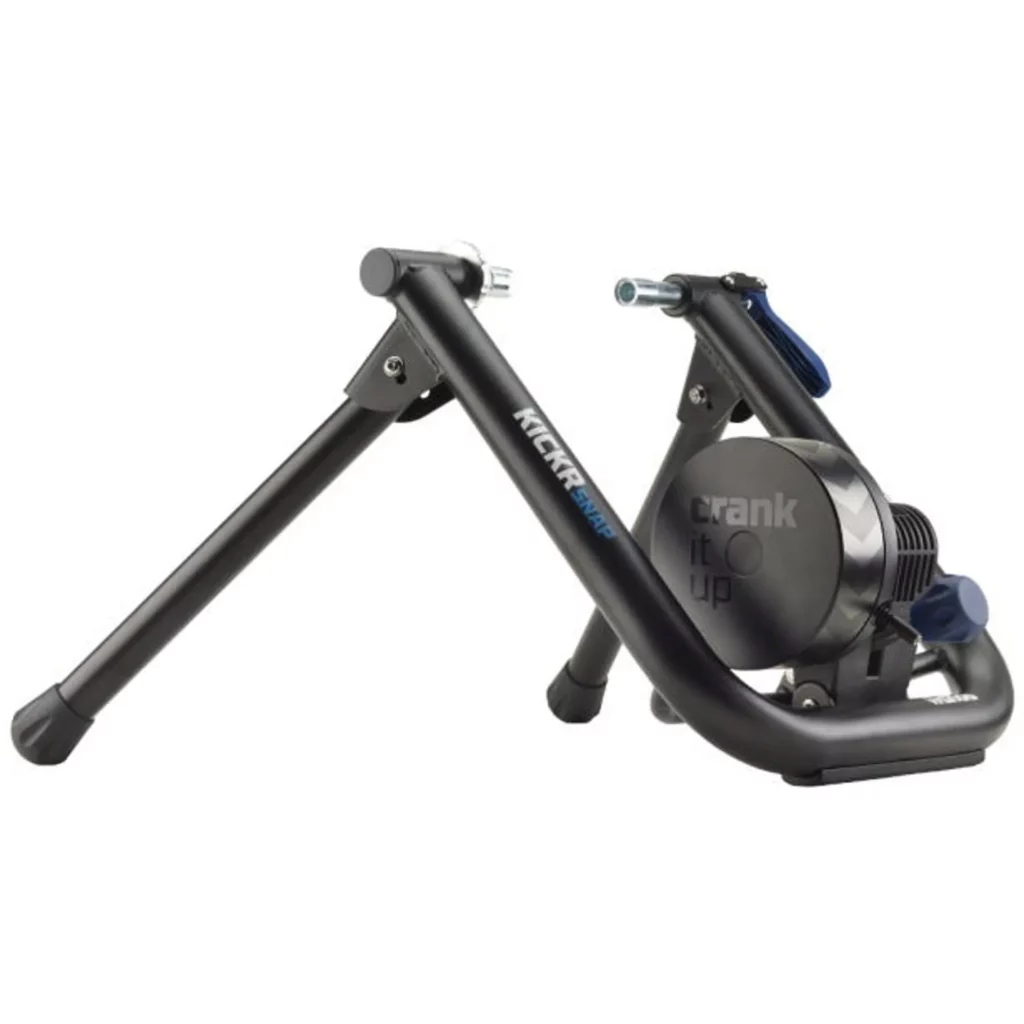
Resistance on a wheel-on turbo trainer is usually provided by a magnet; however, wind or fan resistance is sometimes utilised. Fluid trainers work in a similar way but are much quieter than the magnet equivalent.
Many people use an old or alternative bike for their turbo, as opposed to taking their daily ride on and off. A wheel-on turbo trainer tends to be quite noisy and will wear your tyre out quickly, so using a trainer-specific tyre is preferable.
If you don’t have an extra bike to hand to sit permanently in your trainer, then another option is to purchase an additional wheel. This means you don’t have to change your tyre every time you want to take your ride outside!
Pros of Wheel-On Turbo Trainers
- Easy to set up
- Generally more affordable than direct drive turbo trainers
- Compatible with a wide range of bikes
Cons of Wheel-On Turbo Trainers
- Noisier than direct drive trainers
- Wear tyres out quickly, so a turbo trainer tyre is preferred
Direct Drive Turbo Trainers
Best for: Cyclists looking for a smoother, quieter ride and better data accuracy
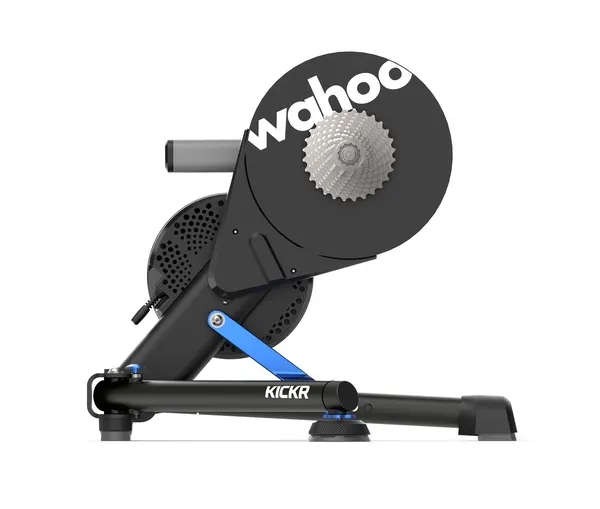
A direct drive turbo trainer is a type of indoor cycling trainer that offers a high-quality and immersive indoor riding experience.
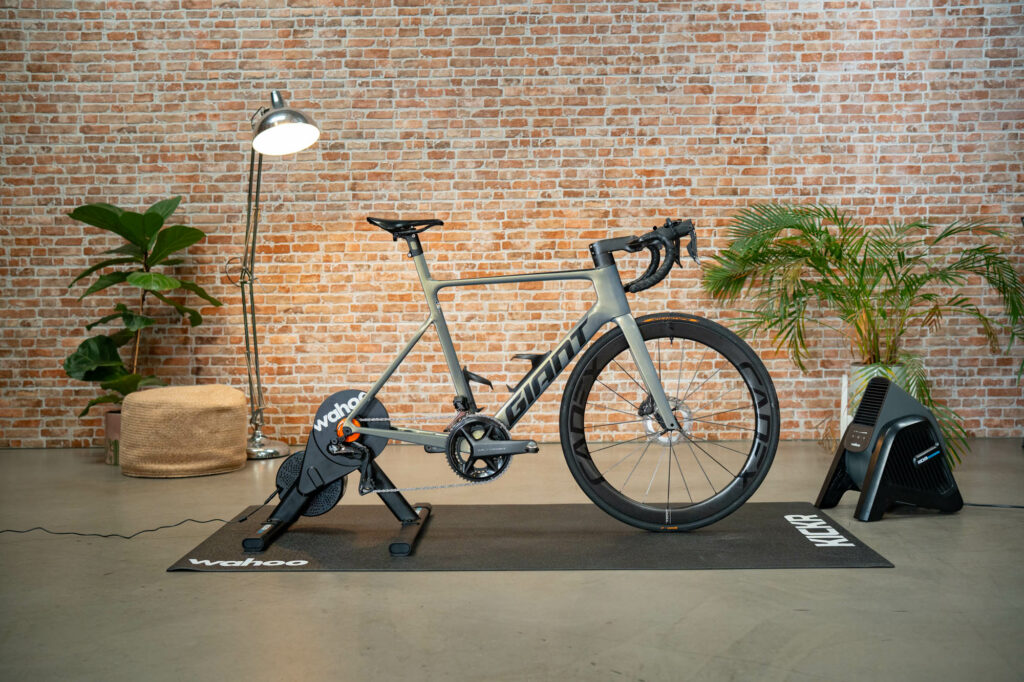
Unlike wheel-on trainers, a direct drive trainer eliminates the need for your bicycle’s rear wheel. Instead, you remove the rear wheel and directly attach the bike frame to the trainer using a cassette that is usually included with the trainer. This design allows for a more accurate and realistic simulation of outdoor riding conditions, as it directly measures your power output and offers precise resistance control.
Direct drive trainers are often favoured by serious cyclists and enthusiasts because they provide a smoother and quieter ride, offer compatibility with various training apps, and allow for a more integrated, immersive indoor cycling experience.
While they tend to be more expensive than wheel-on trainers, their performance and convenience make them a worthwhile investment for dedicated indoor training sessions. If you plan on spending a lot of time training indoors, then a direct drive turbo trainer with “smart” capabilities is definitely worth considering.
Pros of Direct Drive Turbo Trainers
- Quieter than wheel-on options
- Generally compatible with “smart” features
- More precise data
Cons of Direct Drive Turbo Trainers
- Higher cost than wheel-on turbo trainers
- Rear wheel must come off and be stored when bike is on turbo
- Possibility that you may need to purchase an alternative cassette
Rollers
Best for: Cyclists who want to improve balance and pedalling efficiency, alongside fitness
Rollers are a unique type of indoor cycling trainer designed to improve balance, pedalling efficiency, and cycling skills.
They consist of three cylindrical rollers placed on a frame, where the front wheel sits on one roller, and the rear wheel is positioned between the other two. Unlike traditional stationary trainers, rollers do not secure your bike in place, which means you must maintain balance while pedalling.
They offer a challenging and skill-building experience as they require cyclists to develop a smooth and controlled pedalling technique, as well as staying balanced on the bike. They also help you maintain focus and stay engaged during your session, because if you don’t, you’ll likely be tumbling over!
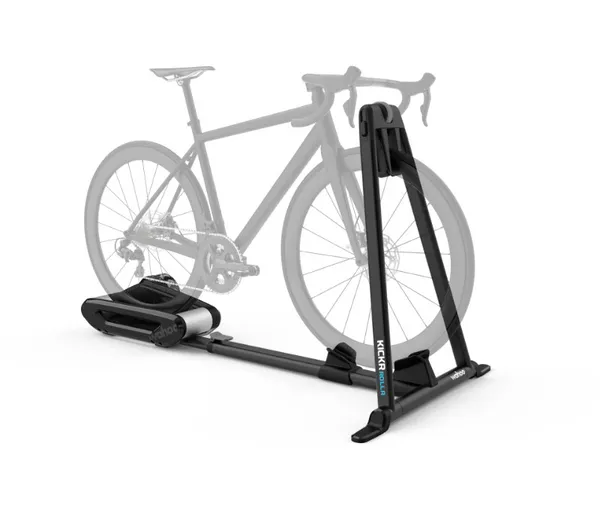
Though rollers were originally a “non-smart” indoor training option, you can now get smart rollers such as the Wahoo ROLLR that merge the two training styles. The Wahoo ROLLR allows for quick and easy setup, while offering the natural ride feel that rollers provide.
Pros of Rollers
- Improve balance, pedalling efficiency and cycling skills alongside fitness
- Focus on the above can make a session more engaging
Cons of Rollers
- Higher possibility of an accident if concentration or balance slips
- Can take up more storage space when not in use
Smart vs. Non-Smart Turbo Trainers
Non-Smart / Basic Turbo Trainers – A Classic Indoor Training Option
Best for: Cyclists looking for an affordable and simple indoor training option, who aren’t bothered about smart features
A basic turbo trainer will allow you to quickly attach your bike and get pedalling. They’ve been around for many years, and while many now opt for a Smart Trainer, a basic trainer is a great option if you want a budget-friendly way to get pedalling inside.
Usually, your rear tyre will run against a roller, and this will allow you to pedal while stationary. The resistance is provided via magnets, air or fluid as mentioned previously.
A basic turbo trainer cannot be connected to apps like Zwift directly, but as an alternative you could purchase a speed/cadence sensor set and connect to apps this way. The data won’t be as accurate, but it beats staring at a blank wall!
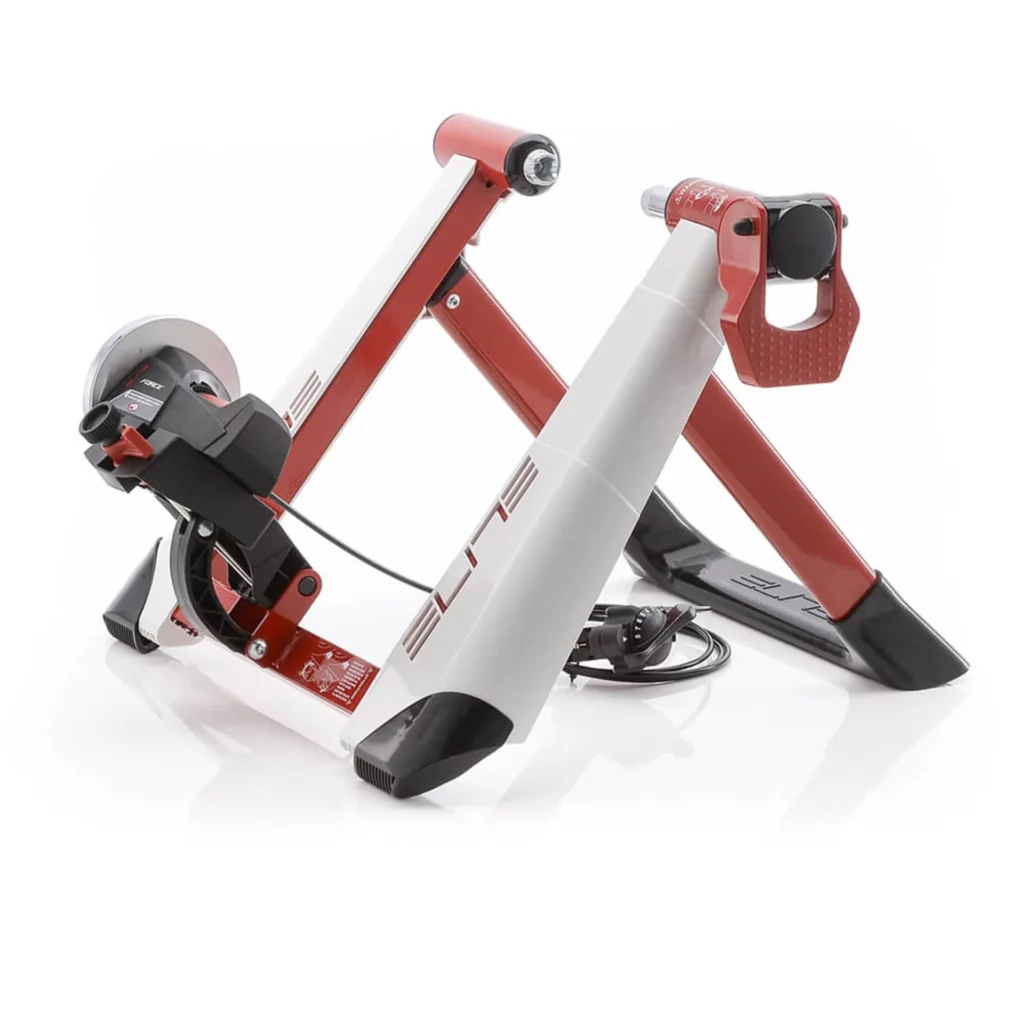
Pros of Basic Turbo Trainers
- Generally the cheapest indoor training option
- Can add speed/cadence sensors to bike for additional data
Cons of Basic Turbo Trainers
- No smart features built in, so the least engaging option
- No longer the best option for data-led riders vs. smart trainers
Smart Turbo Trainers: A Go-To Indoor Training Option for the Modern Cyclist
Best for: Cyclists looking for an engaging way to train inside, with accurate training data
If the idea of sitting on a stationary bike throughout winter sounds dreadfully dull to you, then you’ll be pleased to know that with the development of smart turbo trainer technology it is somewhat easier to keep yourself entertained.
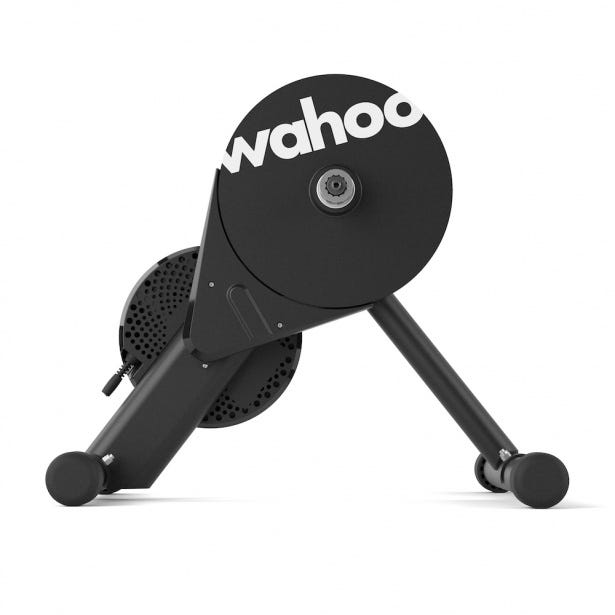
A smart trainer can be connected wirelessly via ANT+ or Bluetooth to your smartphone, computer or other device and using the inbuilt power meter, can measure your performance in real time. This in turn gives you tangible data to measure your progress against.
There are also several apps on the market now that you can connect your trainer to, whisking you away into a virtual world where you can battle it out with other riders and keep the boredom at bay.
Many smart trainers can also simulate the gradient you would find out on the real hills, making the ride feel more realistic!
Pros of Smart Turbo Trainers
- Built-in sensors (power, speed, cadence) for most accurate data output
- Easy connectivity with virtual cycling/training apps
- Easy set-up
Cons of Smart Turbo Trainers
- Generally a more expensive option (due to significantly more features)
- Likely to require an app subscription for optimal output
Smart Trainer Bikes
Best for: Cyclists who want an indoor training option that doesn’t require the constant swapping of wheels/bikes etc.
Cyclists come in all shapes and sizes, and if there’s more than one of you who would like to train inside over winter, the logistics of swapping bikes over on the turbo each time can become a real barrier to getting the work done.
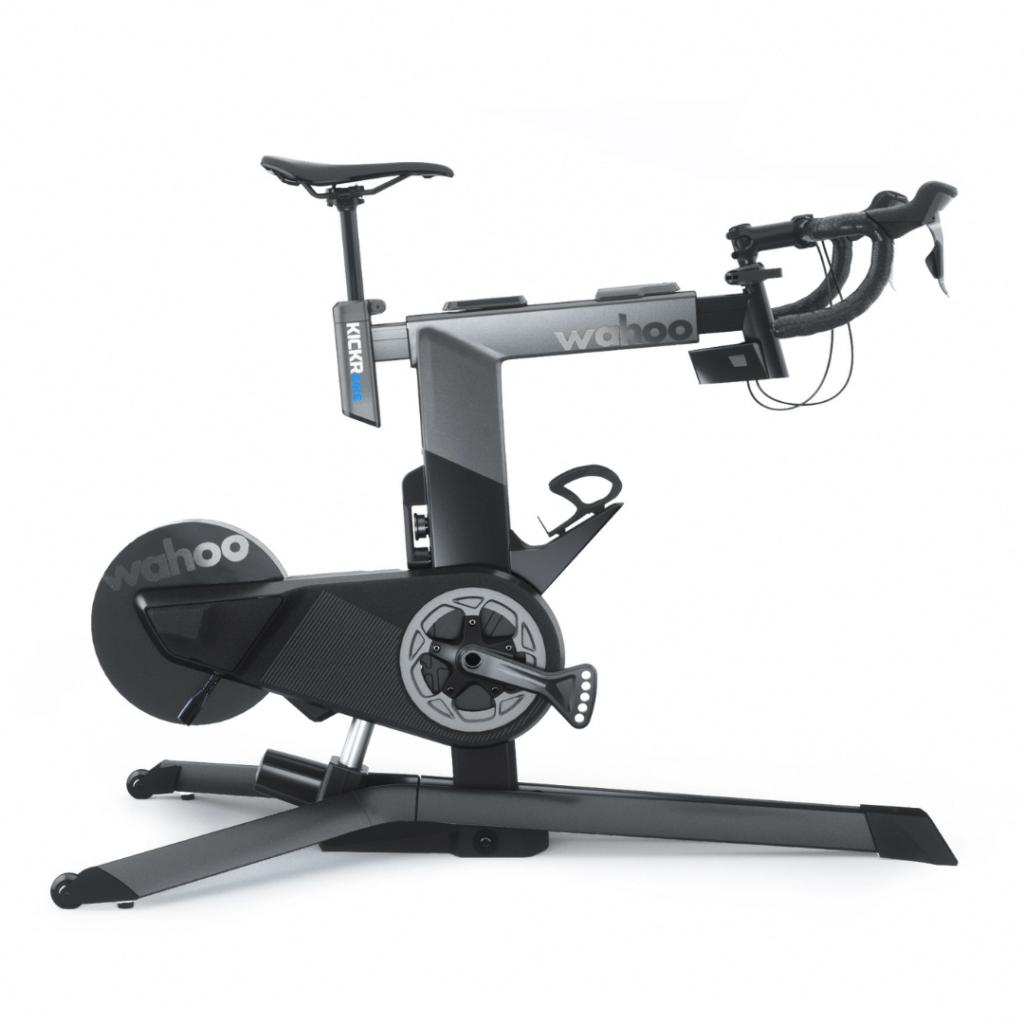
A Smart Trainer Bike eliminates this problem. They are highly adjustable and can easily fit riders of all sizes with just a few quick tweaks of the setup.
The downside of a Smart Trainer Bike is that unlike a traditional turbo, you can’t fold it up and put it away, so you do need some dedicated space to keep it.
However, a Smart Bike will give you extremely accurate metrics and is usually the quietest option.
Pros of Smart Trainer Bikes
- Great option for multiple-user households, as easily adjustable to each rider’s geometry
- Fully smart for app connectivity and accurate training data
- A quiet indoor training option
Cons of Smart Trainer Bikes
- The most costly smart training option
- Take up the most space and cannot be folded/stored away like a standard turbo trainer
Ultimate Indoor Training Options?
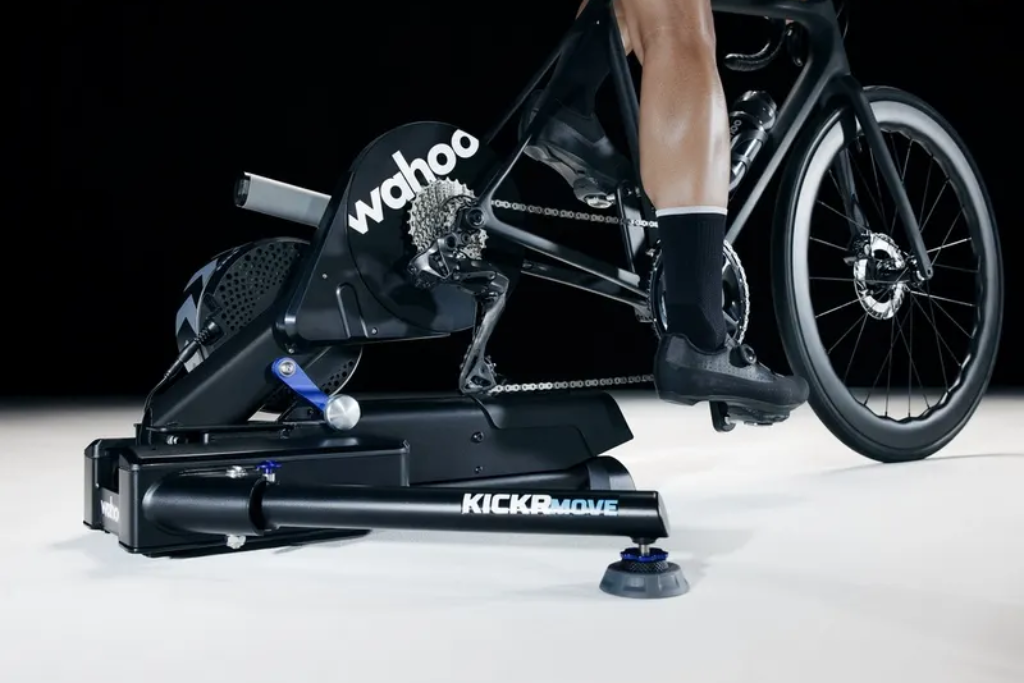
Smart trainers come in all shapes and sizes, with a wide range of features depending on price point. At the upper end of the scale, if you’re looking for the most realistic ride feel possible, there are trainers like the Wahoo KICKR MOVE. The KICKR MOVE features built-in, dual-axis movement that allows your bike to travel freely when powering through indoor rides. Particularly helpful for out-of-the-saddle sprints!
Read our Wahoo KICKR MOVE review here.
Indoor Training Options Comparison Chart
| Trainer Type | Cost | Noise | Ease of Set Up | Level of Engagement | Data Accuracy |
| Wheel-On Trainer | Lower | High | Easy | Lowest | Lower |
| Direct Drive Trainer | Higher | Lower | Medium | High | High |
| Rollers | Low – Med | High | Medium | Medium | Lower |
| Non-Smart Trainer | Lowest | High | Easy | Lowest | Lowest |
| Smart Turbo Trainer | Higher | Lower | Medium | High | High |
| Smart Trainer Bike | Highest | Lower | Easiest | High | High |
Recommended Indoor Training Accessories
Once you’ve decided on your turbo trainer type, there are several different accessories available to help enhance your ride.
Zwift Cog & Click Upgrade Kit
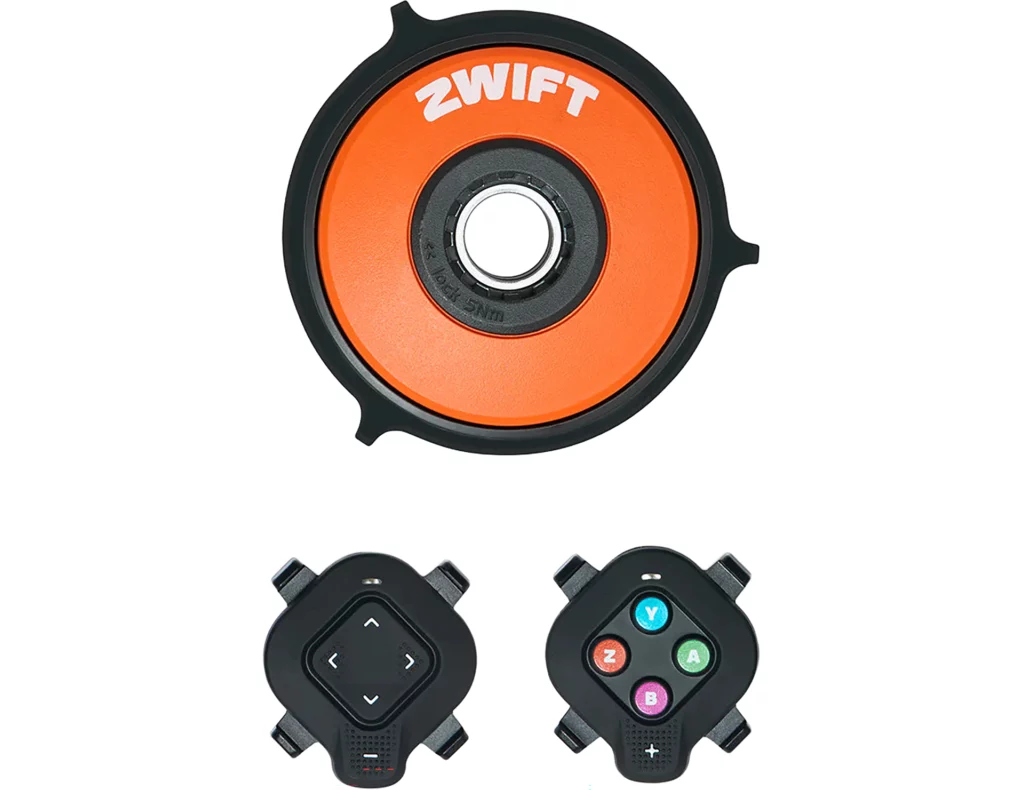
The Zwift Cog & Click upgrade kit offers seamless wireless virtual shifting for users of Zwift on compatible direct drive turbo trainers.
Wireless virtual shifting provides smooth and realistic gear shifts, without the usual noise and wear associated with traditional turbo trainer use. It also means you can switch easily between bikes on your trainer without having to change cassettes!
Please note, the Zwift Cog & Click kit is not compatible with every trainer. Please check compatibility with your chosen model before purchase.
Training Mat
If there’s one additional item we’d recommend as essential, it would be a training mat. This will help prevent your trainer from skidding and sliding across your floor when you put the power down, preventing damage and reducing the noise generated both from any movement and the trainer itself. It will also protect your flooring or carpet from the inevitable sweat you will be working up.
Riser Blocks
A riser block is particularly helpful if you’re using a wheel-on trainer, as the wheel-on trainer will elevate your back wheel slightly in comparison to the front. A riser block will bring your front wheel up level with the rear, putting you in a more realistic and comfortable riding position.
Sweat Towel
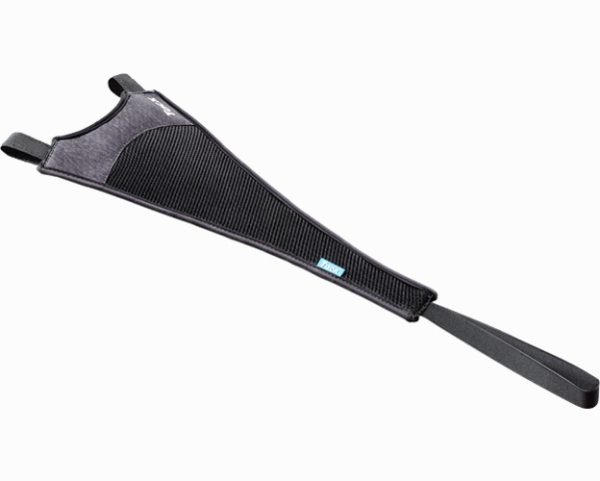
There’s no way around it – training indoors is going to make you sweat, which over time can corrode your bike’s top tube. A trainer-specific sweat towel will catch the sweat as it drops off and prevent you from damaging your pride and joy.
Fan
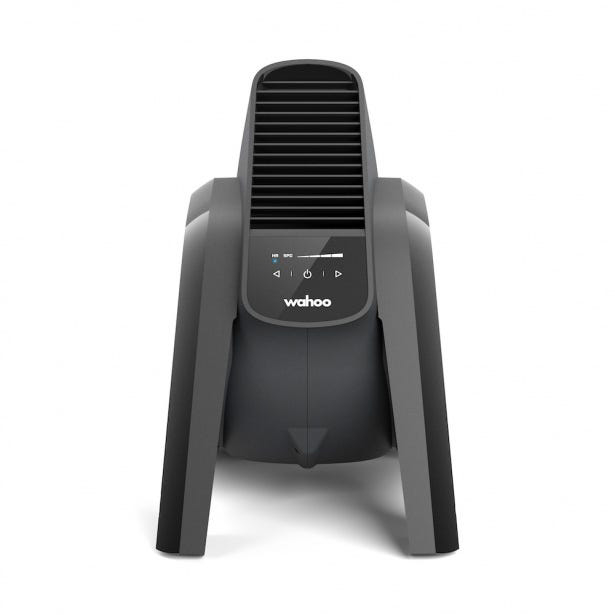
If you’re training inside, you’re going to get HOT. So sourcing some sort of fan is probably going to make the process a little more enjoyable. Obviously, any fan will do, but there are also turbo trainer specific options like the Wahoo KICKR HEADWIND that tunnel the fan’s airflow at your body where you need it most. Plus, it provides a more outdoor feel, indoors.
Indoor Training Apps
Gone are the days where training indoors is a lonely and at times tedious affair. With the development of smart trainers and the accompanying apps, indoor training becomes an interactive and social endeavour.
There are several different apps on the market, all with slightly different features and functions. But ultimately all with the same goal of making training a more enjoyable experience.
We’ve highlighted a few options below.
Zwift: An Indoor Training Favourite
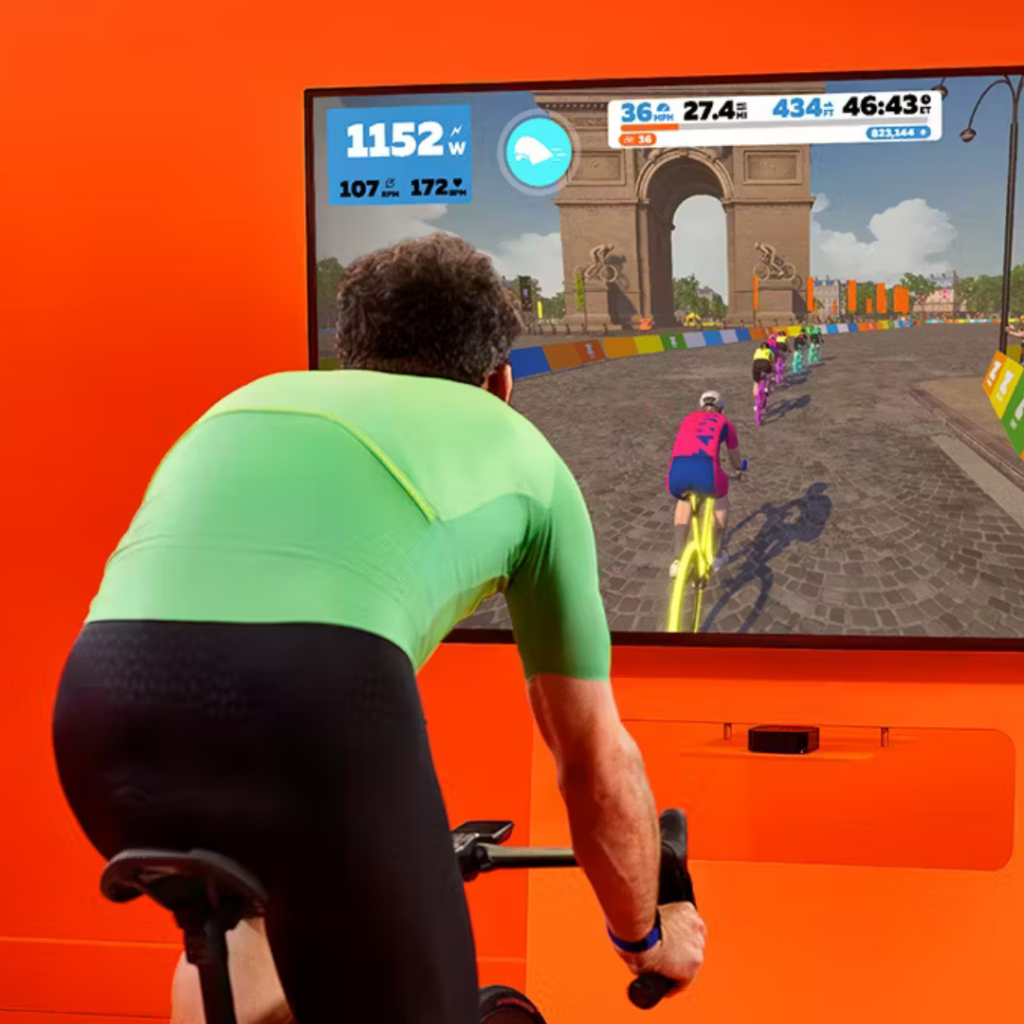
Zwift is possibly the most well-known cycling app on the market. It transports you into a virtual world and truly gamifies your training.
Zwift features plenty of structured training plans/workouts, but what sets it apart is the social interaction. You can head out for a solo spin if you prefer, jump into a group ride or even get stuck into a race against your fellow indoor cyclists. Computer game style graphics make for vibrant viewing, and you can either make the most of Zwift’s virtual world “Watopia” or ride routes based around real locations from across the globe.
TrainerRoad
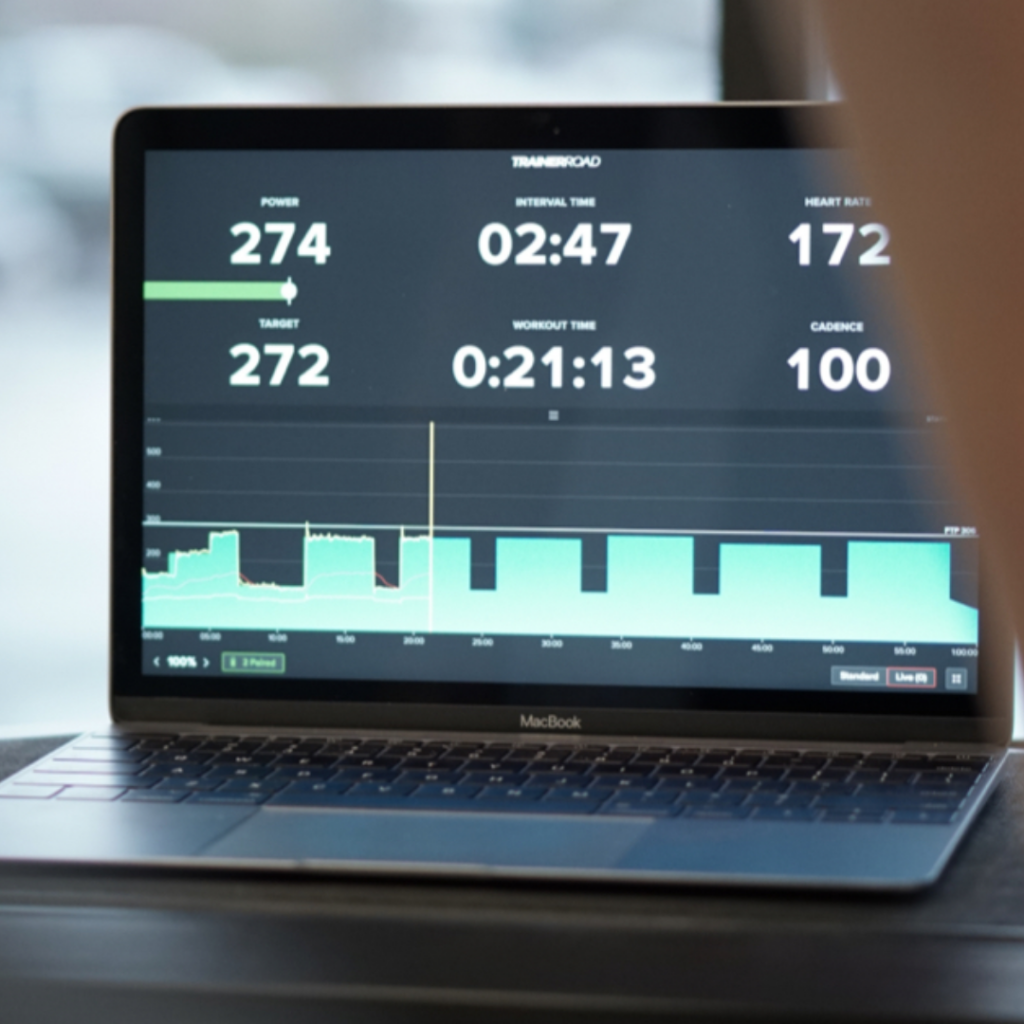
TrainerRoad steers clear of the virtual interaction aspects and focuses purely on your training. Following a training plan like those that TrainerRoad offers provides you with structure and eliminates any decision-making fatigue when it comes to your next session. Having a plan to follow and measure progress against is great for motivation!
Proprietary Software
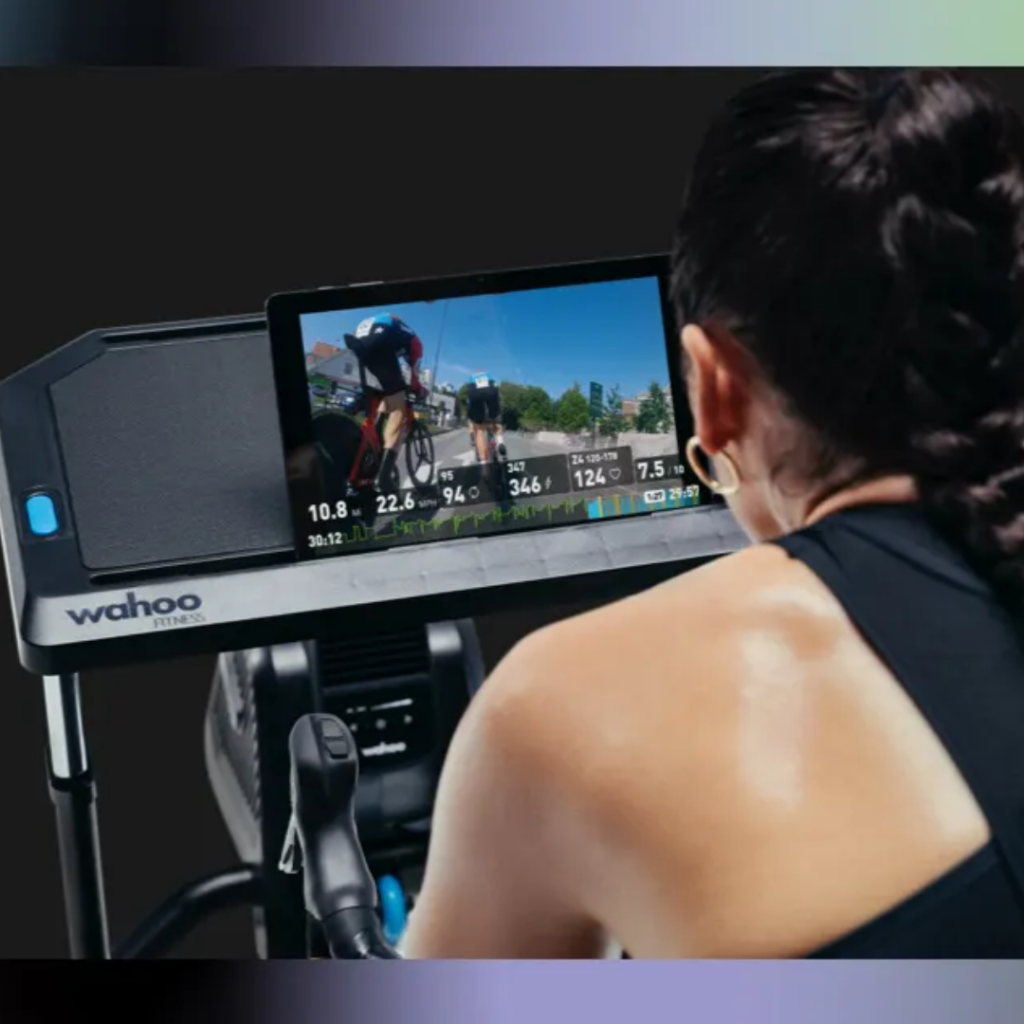
Both Wahoo and Tacx (Garmin) have their own proprietary software. Wahoo offers its Wahoo membership, and Tacx/Garmin provide indoor training options through it’s Tacx Training app.
Wahoo SYSTM focuses more on the training element and helps you build/follow a training plan. For virtual rides, Wahoo recommend using Zwift.
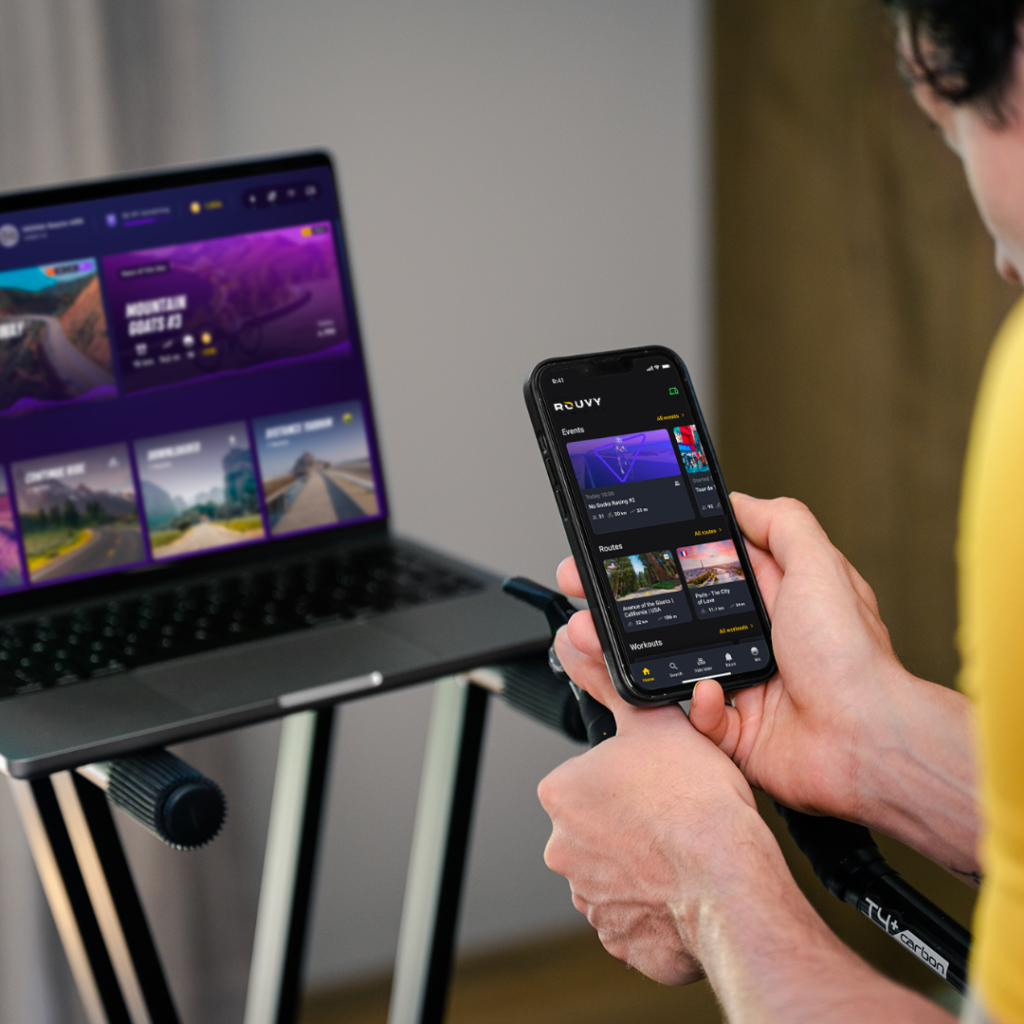
ROUVY
Much like Zwift, you can race your friends online, but instead of a completely virtual world, the app adds avatars to real-world footage of your chosen route. Rouvy also offers training plans, as you would expect from any of these apps.
Ultimately, there are many training apps you can go for – which you choose will depend on whether you prefer to just get your head down and get your training done, or you want to immerse yourself in a virtual world of online cycling.
If you need some extra tips on how to liven up your indoor training, why not check out our article “How to Make Indoor Cycling Fun” here.
Frequently Asked Questions about Indoor Training/Indoor Cycling
Is Indoor Cycling as effective as riding outside?
For purposes of fitness improvements, indoor cycling is extremely effective. When you’re out on the road, there are inevitable periods of time where you’ll be coasting or unable to put the power down. When you’re training inside, you have no such problems and can push continuously through a workout. Taking this into account, you’re probably getting an equally effective workout in half the time, compared to riding outside.
What you do miss is general bike handling skills. These can’t be truly replicated inside, so if you’re hoping to improve things like cornering and general riding skills then you should still try to get outside over winter when possible.
What do I need to get started with indoor cycling training?
At a bare minimum, you’re either going to need a smart trainer bike, or a bike and a turbo trainer. Which type you choose is individual to your requirements. If you want to connect to apps, then a smart trainer is best. If you’re just looking to get started and get your legs spinning then a wheel on turbo trainer is perfectly fine, but you may want to use a turbo trainer-specific tyre.
However we’d also recommend the following items:
– Training Mat (to prevent your setup shifting along and damaging your floor while in use)
– Sweat Towel (to protect your top tube from corrosive sweat)
– Fan (because you will get HOT)
And of course, stay hydrated!
Can I use my normal bike on a turbo trainer?
Yes, absolutely. While some riders do opt to have a second bike just for turbo trainer use (to reduce the need for frequently swapping bikes/tyres etc), you can just use your everyday bike. In fact, nowadays it’s easier than ever to do so. To use a Direct Drive Turbo Trainer, all you need to do is remove your back wheel and hook the bike onto the trainer. You can also mount your normal bike directly to a wheel on turbo trainer (though it will be loud and will chew through your tyres quickly – hence a turbo specific tyre/spare wheel combo is popular with many riders).
It’s worth noting that sweat is corrosive and can damage your bike over time. Use a sweat towel to protect your top tube and keep an eye on your components for any wear.
Are Direct Drive Turbo Trainers better than Wheel-On Turbo Trainers?
Which one is best is dependent on an individual’s needs. If you want the most accurate data, a quieter system and a feature-rich experience, then a smart direct drive trainer is probably better.
But if you’re looking for something affordable and easy just to get started on, then a simple wheel-on trainer would be perfect.
There are pros and cons to both!
Does using a turbo trainer damage your frame?
Using a turbo trainer won’t damage your frame by default, but there are 2 things you should be aware of.
Firstly, sweat is corrosive, so if you’re training hard there is a risk that over time sweat can damage your paint and components. A sweat towel will help prevent damage to your frame by catching the sweat as it falls. Sweat is also likely to get into your headset, handlebars and bolts – so make sure you wipe down your bike after use.
Secondly, hard out-of-the-saddle sprinting (where you will naturally rock side to side) can place excess lateral stress on your bottom bracket, chainstays, seatstays and frame. Most seated efforts will be absolutely fine, but it’s also worth checking if your particular brand/model of bike is certified for use on an indoor trainer (particularly if it’s your pride and joy!).
Indoor Training Conclusion
Training indoors through winter is a great way to keep your legs spinning and make sure you don’t lose the precious fitness gains that you made during the summer months. There’s an indoor trainer to suit almost every budget, and with numerous apps on the market, you can make indoor training a more interactive experience than ever.
If you’d like to discuss your options in more detail, then pop into any of our 12 stores or contact our support team for help. Many of us utilise indoor training through winter, so we have a wealth of knowledge and are ready to help you start your indoor training journey.